Published: 20/08/2026
Why Compressed Air Treatment is Critical for Industrial Efficiency
Compressed air plays an important role across a wide range of industries, from manufacturing plants and automotive facilities to food production and pharmaceutical processing.
Check out our compressed air treatment guide to learn why it’s critical in certain industries and why you should upgrade your setup.
What is treated compressed air?
Treated compressed air has been filtered and dried to eliminate any potential contaminants and moisture that could make their way into pneumatic tools and machinery.
The level of air purity required isn’t the same in every single industry. Each one operates under its own set of regulations and quality standards, depending on how the air is used. With this in mind, air treatment systems need to be tailored to very specific demands.
What are the common issues caused by untreated compressed air?
Untreated compressed air can lead to severe issues if left untreated, including:
- Corrosion and rust caused by moisture
- Equipment/pneumatic tools failure
- Oil contamination
- Reduced energy efficiency
- Blocked filters
- Product quality issues
- Safety risks
The benefits of compressed air treatment
Here are some of the reasons why industrial environments wouldn’t survive without compressed air treatment.
Protecting equipment from damage
One of the key reasons industrial environments require compressed air treatment is to protect equipment. Untreated air can allow bacteria and moisture to enter pipes and machinery. Over time, this can degrade its efficiency, giving rise to problems such as blockages and corrosion.
While you probably won’t notice these issues straight away, they can cause a gradual decline in performance, leading to the failure of key components. Treated compressed air, produced by filtration and drying systems, prevents harmful particulates from reaching sensitive equipment.
Cutting energy consumption
When compressed air is properly treated, components don’t have to work overtime to produce the same output. If untreated compressed air enters systems, it can cause clogged filters and pressure drops, meaning that cycles have to run much longer. This dramatically increases the energy consumption.
Why wait for energy bills to climb before taking action? Instead, consider treated compressed air. It helps maintain steady pressure and constant airflow, allowing equipment and internal components to operate as intended.
Supporting product quality
In certain industries, product quality is vital – especially in food production and pharmaceuticals. Even tiny traces of moisture or oil can affect hygiene standards and product integrity. Therefore, properly treating compressed air helps to guarantee consistency and reduce the risk of defects or batch rejection.
Reducing downtime
By removing contaminants early, air treatment systems reduce strain across the entire network.
A poorly maintained air system often leads to unexpected breakdowns. As a result, production is delayed, and workers are paid to sit around until the machinery is back up and running. What’s more, companies could face drastic repair costs. For small businesses, this can have a drastic impact on their bottom line. Investing in air treatment means you’ll experience fewer production delays and more predictable maintenance schedules.
Damage business reputation
Customers expect products to meet a certain standard, and when those expectations aren’t met, it can quickly lead to dissatisfaction. Whether it’s a defect or an inconsistency in the finished product, even small quality problems can affect how customers perceive a business. If customers notice that a product doesn’t meet the expected standard, it can result in complaints and returns.
Types of compressed air treatment machines
Compressed air can be treated in several ways and using various machines:
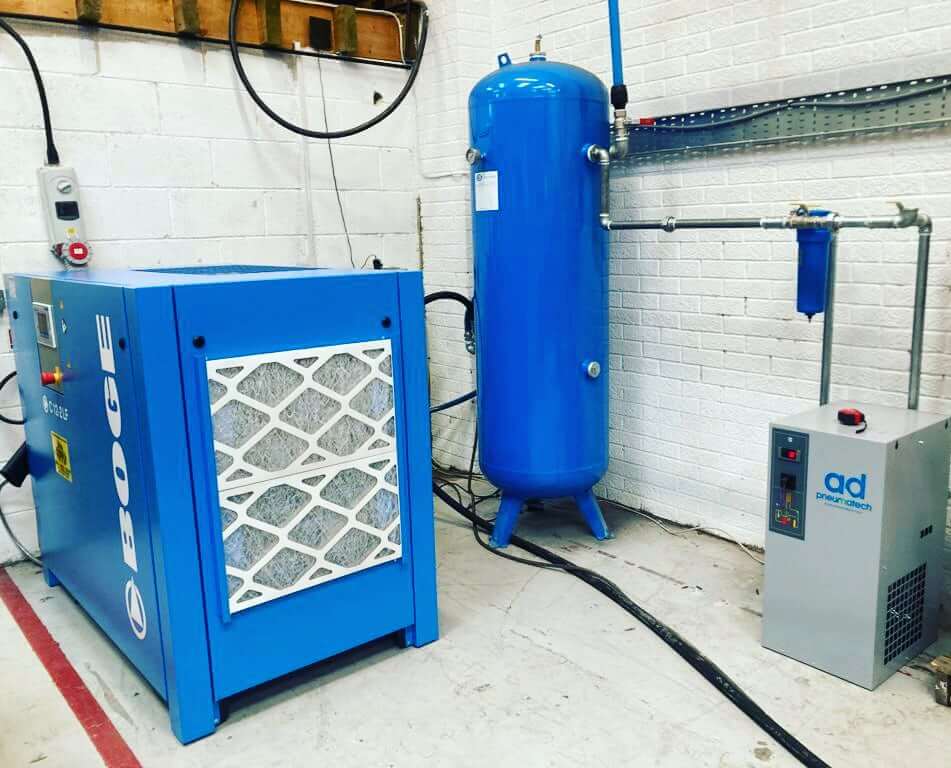
Air dryers
Moisture can easily work its way into machinery and pneumatic tools, causing major impacts on product quality. However, there are many compressor air dryers available on the market, each with varying dew-point capabilities. The dew point is the temperature at which water vapour in compressed air condenses into liquid water.
Air filters
Air filters play an important role in maintaining the quality of compressed air by removing contaminants before they enter the system. They catch dust, dirt, rust particles and other airborne debris. This helps prevent these impurities from reaching the compressor and affecting performance. By keeping unwanted particles out of the system, air filters help to protect equipment and improve efficiency.
Air converters
Compressed air systems can be affected by oil contamination. Even small amounts of oil entering the system can lead to product contamination, which is a no-go in sensitive industries.
To help prevent this, air converters are specifically designed to handle trace oil contamination by converting oil vapours into harmless substances such as water and carbon dioxide. This process helps maintain a continuous supply of clean, high-quality compressed air and supports class 0 oil-free purity standards. This is particularly important in industries such as food production and healthcare.
Get in touch if you have any questions about adding air treatment to your compressor system.
At Air Supply Lancashire, we are proud to be one of the UK’s leading suppliers of compressed air treatment equipment, helping businesses across a wide range of industries improve efficiency and protect their systems. As an Official Platinum BOGE Partner, we stock BOGE air treatment solutions – giving businesses access to state-of-the-art solutions tailored to their needs.